How Much Range Do Electric Bikes Get?
Most brands advertise ranges like “up to 60 miles” or “up to 120km,” but real-world range depends on:
Realistic Range Estimates
-
250–400Wh: 15–35 miles (24–56km)
-
500–700Wh: 25–60 miles (40–96km)
-
750–1000Wh: 40–90 miles (64–145km)
If you’d like to know a bit more about battery range and the variables that can affect this, the masters of technology, Bosch, have a great guide HERE.
Battery Placement: Why It Matters
Common placements:
-
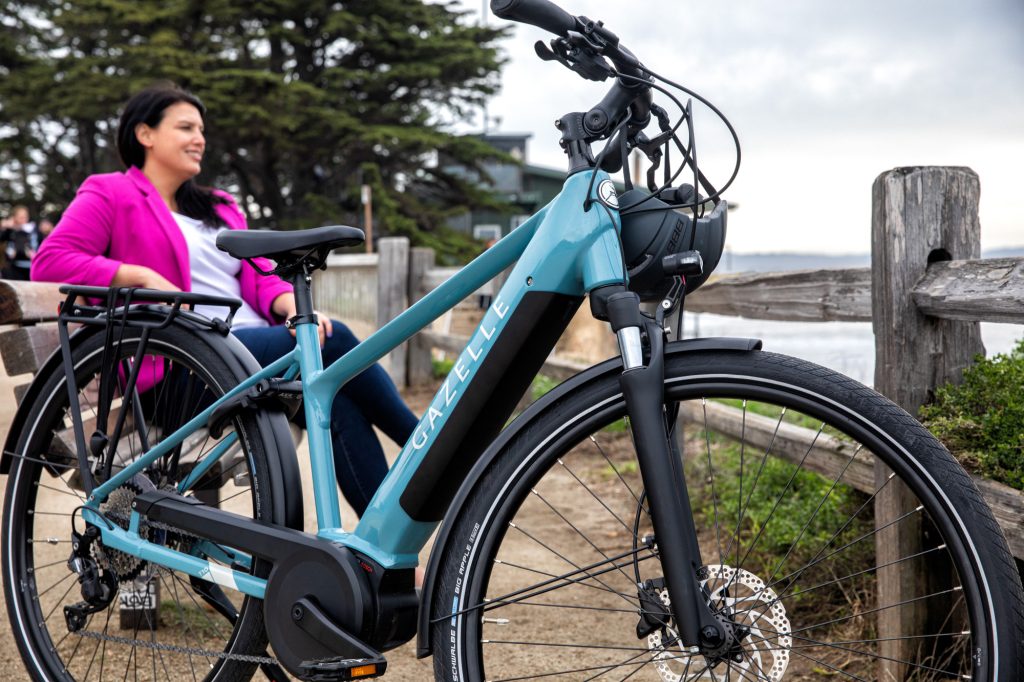
Down tube battery (best balance)
-
Rear rack battery (less stable, common on older models)
-
Integrated internal battery (clean look, harder to remove)
-
Dual battery systems (best for cargo and touring)
Battery Lifespan
Most lithium eBike batteries last:
That typically equals:
Charging Time
Charging usually takes:
Fast chargers exist but can slightly reduce battery lifespan if used constantly.
Battery Safety: What to Look For
This matters more than most buyers realise.
Look for:
-
UL certification (where available)
-
Name-brand battery cells (Samsung, LG, Panasonic)
-
Smart battery management system (BMS)
Avoid unknown ultra-cheap batteries with no certification.
Sizing, Brakes, Suspension, Legal Classes + Final Checklist
Getting the Right Size Matters
Even the best electric bike will feel wrong if the sizing is off.
General sizing tips:
-
If between sizes, size down for easier control
-
Step-through frames are easier for commuting and cargo
-
Check stand over height and reach, not just height charts
Brakes: Don’t Compromise Here
Because eBikes are heavier and faster than normal bikes, braking is critical.
Mechanical Disc Brakes
Pros
Cons
-
Less stopping power
-
More hand effort
Hydraulic Disc Brakes (Recommended)
Pros
-
Strong stopping power
-
Better in rain
-
Less hand fatigue
Cons
If you’re buying a commuter eBike or anything over 500W, hydraulic brakes are strongly recommended.
Suspension: Do You Need It?
No Suspension
Best for: smooth pavement, lightweight bikes
Cheapest and lowest maintenance.
Front Suspension
Best for: rough roads, gravel, comfort
Great middle option for most riders.
Full Suspension
Best for: trails, mountain biking
Usually more expensive and heavier.
Tyres: Comfort vs Speed
-
Narrow tyres = faster, more efficient
-
Wider tyres = comfort, grip, stability
A great “all-around” commuter tyre size is 2.0”–2.4”.
Electric Bike Legality (Important!)
If you plan to ride on the public highway, bike paths or trails, then legally, your ebike should operate a ‘pedal assist’ system comprising a motor that has a continuous rated power not exceeding 250 Watts and only be assisted up to 15.5mph (25kph).
How Much Should You Spend? (Price Guide)
Budget eBikes (up to £1,500)
Good for casual riders, flat terrain
Expect compromises in:
-
brakes
-
battery quality
-
long-term durability
Mid-Range eBikes (£1,500-£3,000)
Best value category
You’ll often get:
Premium eBikes (£3,000+)
For riders who want:
Final Electric Bike Buying Checklist
Before buying, make sure you know:
✅ What type of riding you’ll do
✅ Your preferred motor type (hub vs mid-drive)
✅ Battery size in Wh (not just “range”)
✅ Torque rating (Nm) if you live in hills
✅ Brake type (hydraulic strongly recommended)
✅ Total weight of the bike
✅ Warranty length and brand reputation
✅ Local eBike laws and class limits
✅ Availability of replacement parts
Conclusion: The Best Electric Bike is the One You’ll Actually Ride
The best electric bike isn’t always the most powerful or expensive – it’s the one that fits your lifestyle, terrain, and comfort needs.
We very much hope that you’ve found our Electric Bike Buying Guide useful!
Browse our full range of electric bikes HERE.